In the world of diamonds, many often wonder what is a certified diamond. Let me tell you a certified diamond stands as an esteemed object of distinction. Evaluated and graded by independent gemological laboratories, these diamonds undergo a meticulous certification process leveraging a suite of advanced gemological tools and techniques.
The certificate that results offers an official, comprehensive assessment of the diamond’s attributes, covering its cut, color, clarity, and carat weight. By choosing a certified diamond, buyers gain confidence in its authenticity and intrinsic value, ensuring they are well-equipped to make educated choices when investing in such treasured gems.
Key Takeaways
- Certified diamonds have been evaluated and graded by reputable diamond grading institutions such as GIA, IGI, EGL, GSI, and HRD.
- These institutions provide unbiased grading reports and certifications that ensure the authenticity and quality of diamonds.
- The certifications help buyers make informed decisions by providing objective criteria, such as the 4Cs (color, clarity, cut, carat weight), to assess the diamond’s value.
- Certified diamonds instill confidence in potential buyers and establish trust in the diamond industry by eliminating concerns about counterfeit diamonds and guaranteeing the authenticity and quality of the product.
What Is a Certified Diamond?
Ever since I got my first pair of diamond earrings, I was captivated by the intricacy of diamond certification. Think of it as an authenticity stamp; a deep dive into each gem’s heart and soul. Experts from an independent gemological laboratory become the storytellers, revealing tales of its cut, color, clarity, and the iconic carat weight.
To me, a certified diamond isn’t just about sparkle and glamor; it’s a badge of authenticity. It’s the comforting whisper that tells me I’ve chosen a true masterpiece, a testament to nature’s wonder and craftsmanship combined.
What Is Diamond Certification?
The Gemological Institute of America (GIA) caught my attention with its rigorous standards and unparalleled reputation in the world of diamond certification. You can think of it as a gem’s resume to understand it better, detailing its achievements in the 4Cs: carat, color, clarity, and cut. It’s this certification that gives every diamond enthusiast like me the confidence to wear or gift a piece, knowing it’s of impeccable quality.

Here are my personal takeaways from my journey into diamond certification:
1. The Diamond’s Biography: A diamond certificate is like a biography, chronicling its life and virtues. Whether you call it a grading report or diamond certification, it’s a testament to the stone’s legacy and grandeur, offering insights that the naked eye might miss.
2. The Assurance in Every Purchase: Every time you buy a diamond, you are investing in a story, a slice of Earth’s history. Having that certified badge is like a seal of approval, ensuring that your story is transparent, genuine, and true. It’s a reminder that you’re not just buying based on allure but also on facts.
3. The GIA Gold Standard: When it comes to trust, GIA stands tall. In my many adventures through the diamond realm, the GIA’s name resonates like a beacon of credibility. Their meticulous approach and unwavering standards make their certifications akin to the Nobel prizes in the world of gemology.
What is a GIA diamond?
The first time I held a GIA diamond, I felt its significance. A GIA diamond is one that’s been scrutinized and certified by the Gemological Institute of America. For someone like me, passionate about the finer details, knowing that the diamond has passed through the stringent standards of GIA means I’m holding a piece of art with a story – its cut, clarity, color, and carat weight, all meticulously assessed. To me, it represents trust and brilliance intertwined.
GIA certified diamonds are considered to be among the highest quality diamonds available in the market. These diamonds have undergone rigorous testing and grading by experts at the GIA, who assess various factors such as color, clarity, cut, and carat weight to determine their overall quality.
By choosing a GIA certified diamond, you can have confidence in knowing that you are purchasing a genuine, high-quality stone.
Advantages of Buying a Certified Diamond
With every sparkle and every shimmer, I found trust in knowing the gem’s origins and its true worth. Here are some distinct advantages I’ve discovered when it comes to understanding the value of a GIA-certified diamond:
– Assured Authenticity: Each diamond is scrutinized for its genuine nature, ensuring it hasn’t been artificially altered or enhanced.
– Meticulous Grading: With GIA’s stringent standards, every aspect of the diamond – from its cut to its clarity – is precisely evaluated.
– Consumer Confidence: Holding a GIA certification means that the diamond’s quality and value are transparent, making purchasing decisions straightforward and confident.
– Industry Recognition: GIA is globally recognized, ensuring that the diamond’s grading is universally respected and acknowledged.
– Long-term Value: A GIA-certified diamond often retains or appreciates in value due to its verified quality and characteristics.

How to Read a Diamond Certificate
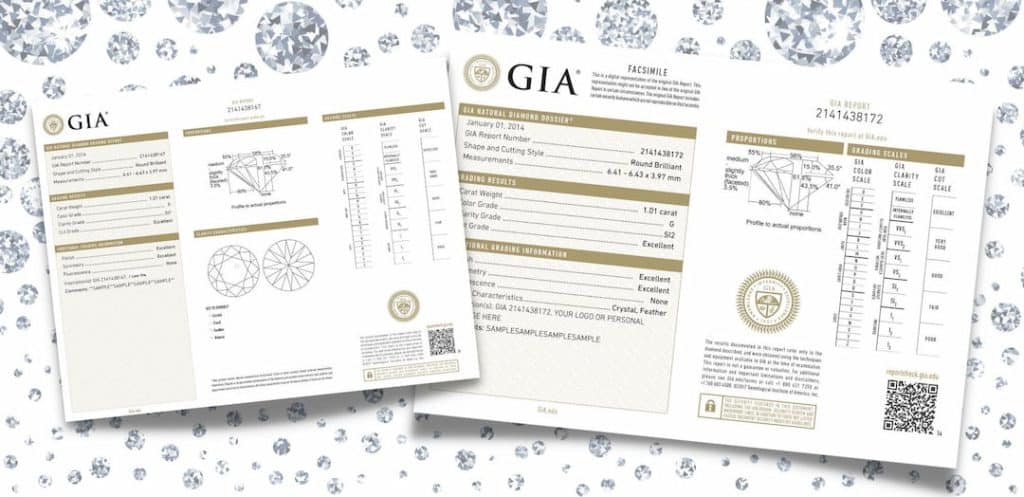
A diamond certificate provides comprehensive details that allow buyers to evaluate and compare the quality and value of certified diamonds versus non-certified diamonds. I’ve compiled some insights that will guide you on how to interpret a diamond certificate. Let’s refine and enhance them together.
– Certificate Origin: Check which reputable gemological institute has issued the certificate. Notable ones include the Gemological Institute of America (GIA) and the International Gemological Institute (IGI).
– Date of Grading: Note when the diamond was graded, ensuring its assessment is recent and relevant.
– Report Number: Each certificate comes with a unique GIA report number, which can be used for reference and verification.
– Shape & Cutting Style: Understand the diamond’s form and the style in which it has been shaped.
– Measurements: Look for the precise dimensions of the diamond.
– Carat Weight: Determine the weight, which plays a significant role in the diamond’s value.
– Color Grade: Check the diamond’s color rating to assess its rarity and quality.
– Clarity Grade: Assess the diamond’s purity and flawlessness through its clarity grading.
– Cut Grade: A reflection of how well the diamond has been shaped and how it interacts with light.
– Polish: Understand the finish and smoothness of the diamond’s facets.
– Symmetry: Check for the alignment and balance of the diamond’s facets.
– Fluorescence: Note any glow the diamond might produce under ultraviolet light.
– Clarity Characteristics: Understand any internal or external features that might impact the diamond’s appearance and value.
Cost of Certification
When buying a diamond, the question of certification often arises. Certification, undertaken by esteemed labs like the Gemological Institute of America (GIA) or the American Gem Society (AGS), gives a diamond its authenticity stamp, examining its 4Cs: carat, color, clarity, and cut.
This process determines not just the diamond’s genuineness but also its value. Certification costs can fluctuate, starting from roughly $40 for a quarter-carat diamond to about $80 for a more detailed assessment of a one-carat gem. I’d always advise aligning with jewelers partnered with reputable grading labs, ensuring rigorous, transparent evaluations. After all, understanding the certification cost is key to a transparent, well-informed diamond purchase.
Types of Diamond Grading Systems
When it comes to diamond grading, several reputable institutions play a significant role in providing certifications. These include the Gemological Institute of America (GIA), International Gemological Institute (IGI), European Gemological Laboratories (EGL), Gemological Science International (GSI), and Hoge Raad voor Diamant (HRD).
Each institution has its own set of standards and methodologies for evaluating diamonds, making it crucial to understand their differences before making a purchase or relying on their certifications.
Gemological Institute of America (GIA)
Ever since I’ve known, the Gemological Institute of America (GIA) stood out as the beacon of authority. Celebrated globally, GIA offers unparalleled, unbiased diamond grading, underpinned by a foundation of consistency and accuracy.
Their grading system, the iconic 4Cs (Color, Clarity, Cut, and Carat Weight), is the gold standard for diamond evaluation.
Every diamond passing through GIA’s doors is examined with a keen eye by their seasoned experts.

Their meticulous reports are more than just documents; they’re guides for both sellers and buyers, ensuring informed decisions are made. In championing transparency and expertise, GIA ensures the diamond world remains a bastion of trust.
International Gemological Institute (IGI)
Shifting our focus to the International Gemological Institute (IGI), it’s evident that they’ve carved a notable position in diamond grading and assessment. Boasting 20 labs globally, IGI provides impartial evaluations and certifies both natural and lab-created diamonds.
Key points to consider about IGI include:
– Wide range: IGI evaluates loose diamonds as well as finished jewelry pieces.
– Nonprofit organization: IGI operates as a nonprofit organization, ensuring an unbiased evaluation process.
– American Gem Society: IGI is affiliated with the American Gem Society, further enhancing its credibility and reputation.
– Uncertified diamonds: IGI provides certifications for uncertified diamonds, assuring customers of their quality and authenticity.
European Gemological Laboratories (EGL)
European Gemological Laboratories (EGL) stands as a trusted pillar in diamond grading and authentication, safeguarding the quality and genuineness of diamonds exchanged worldwide.
EGL’s certification signifies that diamonds have endured a detailed grading journey, encompassing attributes like carat, clarity, color, cut, finish, fluorescence, plotting, and proportions.
Such certifications empower consumers, paving the way for discerning choices, grounded in knowledge and clarity. Through its stringent criteria, EGL proficiently distinguishes the superior gems from their lesser counterparts, offering an unbiased lens into each diamond’s distinct qualities.
Gemological Science International (GSI)
When I think of esteemed institutions in diamond grading, Gemological Science International (GSI) immediately springs to mind.
Delving into their methods, it’s clear that GSI harnesses cutting-edge technology and tools to dissect the nuances of diamonds. They’ve honed a meticulous grading system that assesses pivotal elements like color, clarity, cut, and carat weight. Their stringent procedures guarantee that every certified diamond stands up to a benchmark of quality.
Whenever I consider purchasing diamonds, especially from online platforms like James Allen, a GSI certification becomes my anchor. It instills confidence, ensuring I’m investing in genuine quality while helping me differentiate certified gems from the rest.
Hoge Raad voor Diamant (HRD)
The Hoge Raad voor Diamant (HRD), nestled in Antwerp, Belgium, is a name I’ve come to deeply respect within the diamond realm, particularly in Europe. Recognized for its authority in certifying diamonds and gemstones, HRD paves the way for us consumers to buy with knowledge and clarity.
Three reasons I value HRD certifications as both a buyer and seller:

1. Gold Standard: Every time I come across an HRD certificate, I know I’m dealing with the best. Their rigorous certification, adhering to international benchmarks, signifies that the diamond meets the pinnacle of quality and authenticity.
2. Assurance of Authenticity: Holding an HRD-certified diamond is akin to holding truth. As a seller, presenting this certificate is my testament to a diamond’s genuineness, solidifying trust among prospective buyers.
3. Perfect Diamond Selection: On my quest for the perfect diamond, HRD’s certification lights the path. Their detailed report, accentuating the 4Cs (carat, color, clarity, and cut), equips me with the tools to select diamonds anchored in transparent, objective standards.
Related Diamond Guides
- What Is a GIA Diamond? — the most trusted diamond certification.
- GIA vs. AGS — how the two top grading labs compare.
- What Are Genuine Diamonds? — telling natural diamonds apart with certs.
- What Is a Good Clarity for a Diamond Ring? — reading the clarity line on a certificate.
- What Is the Best Quality Diamond? — using a cert to judge overall quality.
Frequently Asked Questions
How long does it take to get a diamond certified?
Getting a diamond certified involves a thorough assessment of its characteristics. On average, this process, when conducted by reputable laboratories, takes up to 3 weeks from submission to receiving the certification.
Are all diamonds eligible for certification?
No, not all diamonds are eligible for certification. Certification is typically conducted by independent gemological laboratories, which assess the diamond’s quality and authenticity based on various criteria such as the 4Cs (carat weight, color, clarity, and cut).
Can a diamond lose its certification?
Yes, a diamond can lose its certification if it has been altered or damaged in any way that affects its original quality. Certification is based on the diamond’s characteristics at the time of grading.
Is certification necessary when buying a lab-grown diamond?
When buying a lab-grown diamond, certification is essential. It verifies the diamond’s 4 Cs, ensuring its value. For non-gemologists, a credible certificate confirms the jeweler’s quality assertions.
How often should I have my certified diamond re-evaluated or re-certified?
On average, You should have your certified diamond re-evaluated or re-certified every 2 years to ensure its quality and value remain consistent.

Conclusion
Owning diamonds for years, I’ve come to appreciate the weight that a certification carries. Every couple of years, revisiting that certification reaffirms the stone’s inherent value and quality. Just as we regularly check in on our own health, our precious stones deserve that same attentive care.
As time unfolds, ensuring the authenticity and value of our treasures every 2 years not only maintains our investment but deepens our connection to these dazzling wonders. So, as we cherish the shimmer and sparkle, let’s also commit to their periodic assessment. It’s a small act, but one that speaks volumes.