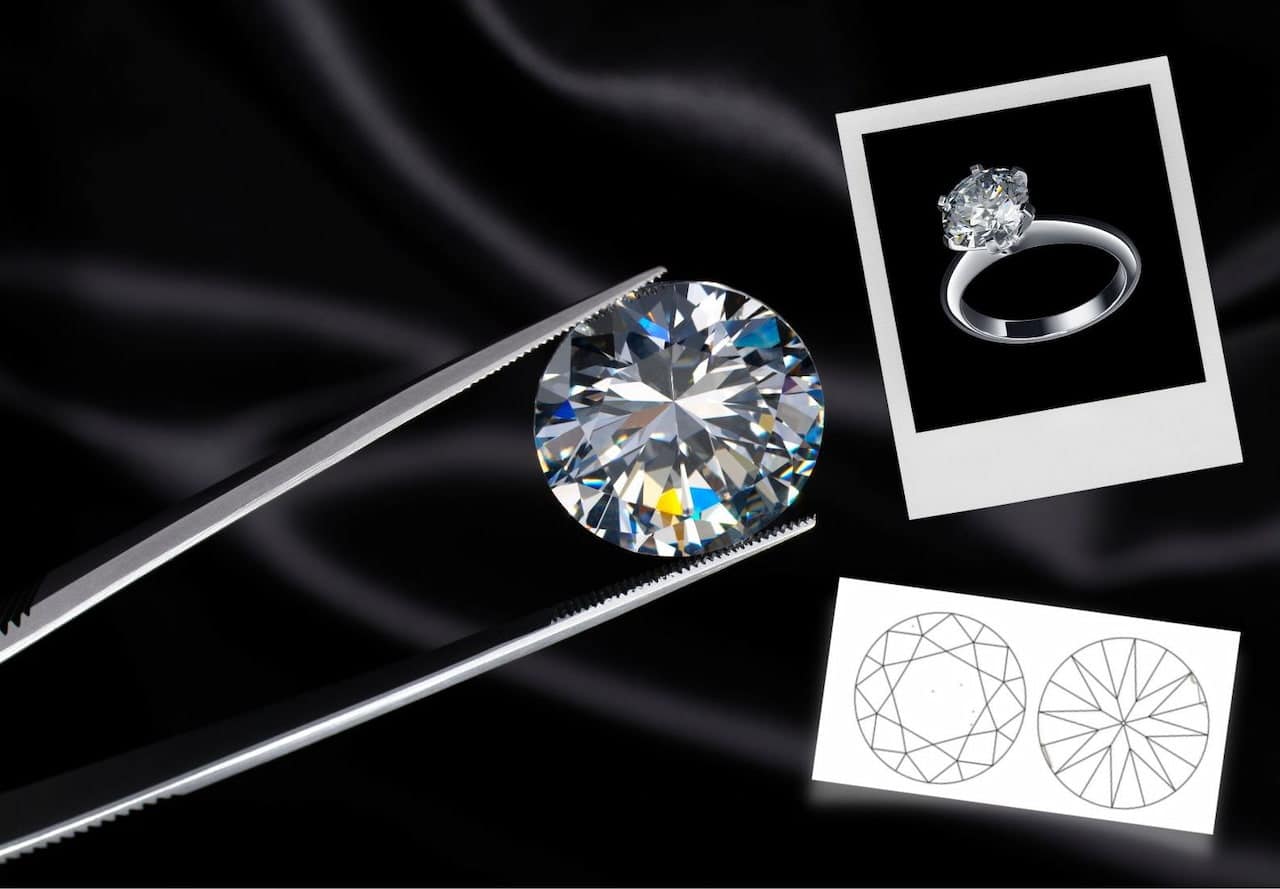
Diving into the sparkling world of gemstones, I was quickly introduced to a term that caught my attention: “What is VS1 diamond?” Simply put, a VS1 diamond is a clarity grade indicating ‘Very Slightly Included’. This denotes that the diamond has minuscule inclusions or internal flaws, often difficult for even trained professionals to identify without magnification.
For most onlookers, these slight imperfections are virtually invisible, making VS1 diamonds a sought-after choice for those desiring almost flawless brilliance and clarity. Truly, it’s where nature’s meticulous crafting meets unmatched elegance.
Key Takeaways
- VS1 clarity is a grade used to evaluate the internal characteristics of a diamond.
- VS1 diamonds have inclusions that are barely visible under 10x magnification.
- VS1 diamonds are generally more expensive than VS2 diamonds.
- It is possible to find eye-clean VS1 diamonds, especially in smaller carat weights.
What Is VS1 Diamond? – Popularity of This Clarity Grade
The allure of diamonds has always captivated me, and as I delved deeper into their mesmerizing world, I stumbled upon a term that resonated strongly: VS1 diamond. I wondered what VS1 diamond is, and my curiosity led me down a path of sparkling discovery. VS1 stands for ‘Very Slightly Included’, a clarity grade that denotes the presence of minuscule inclusions or internal flaws. These inclusions are so tiny that even professionals find them hard to detect without specialized tools.
But what truly astounded me was the rising popularity of this clarity grade. Many jewelry enthusiasts and potential buyers have gravitated towards VS1 diamonds, and for good reason. They strike a delicate balance between near-perfection and affordability. While they may have minor inclusions, these are often invisible to the naked eye, making them a favorite choice for those seeking a blend of luxury, clarity, and value. As I’ve found, the allure of the VS1 diamond is not just in its brilliance, but also in its esteemed place in the diamond hierarchy.

What Is VS1 Clarity?
The GIA Diamond Clarity Grading Scale is a system used to evaluate and classify the internal characteristics of diamonds. This scale assesses factors such as the number, size, relief, nature, and position of inclusions within a diamond.
The clarity grade assigned to a diamond on this scale provides valuable information about its overall appearance and quality.
The GIA Diamond Clarity Grading Scale
The Gemological Institute of America (GIA) has established itself as a globally recognized authority in gemology. One of their most significant contributions is the GIA Diamond Clarity Grading Scale. This comprehensive system classifies diamonds based on the presence of internal or external imperfections, termed inclusions and blemishes respectively.
The scale starts with “Flawless” (no inclusions or blemishes visible under 10x magnification) and descends through various grades like Internally Flawless, Very Very Slightly Included (VVS1 and VVS2), Very Slightly Included (VS1 and VS2), Slightly Included (SI1 and SI2), and Included (I1, I2, and I3). This scale provides a standardized clarity metric, ensuring consistent evaluations across the diamond industry.

The GIA grades diamond clarity on the following scale:
- FL – Flawless
- IF – Internally Flawless
- VVS1 – Very Very Small Inclusions 1
- VVS2 – Very Very Small Inclusions 2
- VS1 – Very Small Inclusions 1
- VS2 – Very Small Inclusions 2
- SI1 – Small Inclusions 1
- SI2 – Small Inclusions 2
- I1 – Inclusions 1
- I2 – Inclusions 2
Is VS1 a Good Quality Diamond?
Navigating the vast world of diamonds, one often grapples with the question: “Is VS1 a good quality diamond?” To shed light on this, I’ve looked into the intricacies of diamond grading. VS1, which stands for ‘Very Slightly Included’, is a clarity grade indicating that a diamond has minor inclusions which are challenging to detect even for trained eyes under 10x magnification. These slight internal imperfections are generally invisible to an unaided observer.
In the broader spectrum of the diamond clarity scale, VS1 diamonds sit comfortably above the median, striking a balance between pristine clarity and budget considerations. While not entirely flawless, the inclusions in a VS1 diamond typically don’t detract from its brilliance or fire. Hence, for those seeking a blend of beauty and value, a VS1 diamond emerges as an excellent choice. It offers near-perfect clarity at a price point that’s more accessible than the top-tier flawless grades.

VS1 Diamond Price
When it comes to pricing, a VS1 clarity diamond’s cost is influenced by elements like carat weight, color, and cut quality. Given the myriad of factors at play, pinning down a uniform price for a VS1 diamond proves challenging.
However, by grasping these determinants, one can make a more enlightened choice when selecting a diamond engagement ring. Below is a table that offers a snapshot of the price spectrum for 1-carat round VS1 diamonds, categorized by their respective color grades:
| Color Grade | Price Range |
| D | $7,500-$11,000 |
| E | $6,800-$10,000 |
| F | $5,700-$8,200 |
| G | $4,200-$6,300 |
It is important to note that these prices are subject to change and may vary depending on additional factors such as the specific cut quality of the diamond. When considering the cost of a VS1 diamond, it is crucial to seek out reputable sources and compare prices and reviews before making a purchase.
Difference Between VS1 and VS2
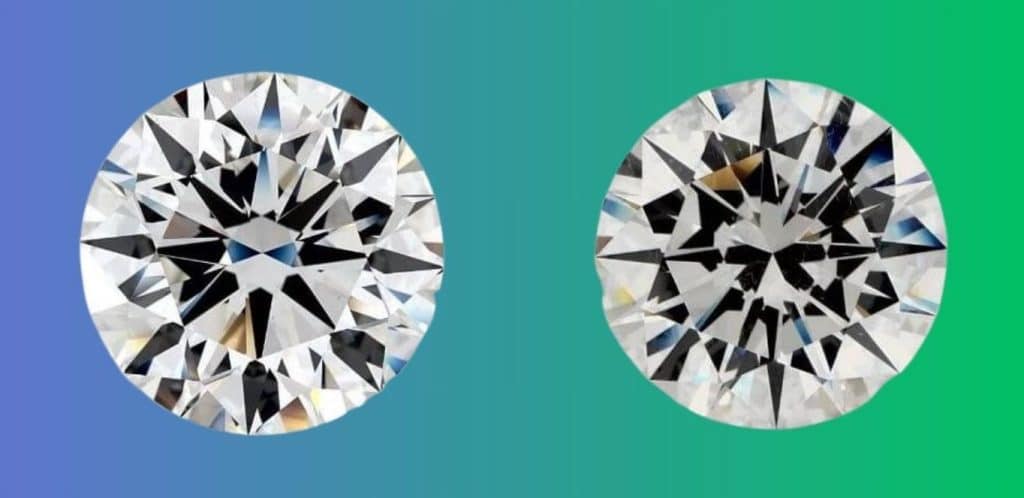
At this point in my research, I came to realize the subtle yet crucial distinctions between VS1 and VS2 diamonds. Here’s my understanding in three concise points:
1. Detection of Inclusions: In VS1 diamonds, the inclusions are typically harder to detect, even under 10x magnification, and shouldn’t be visible to the naked eye. In contrast, VS2 diamonds generally have inclusions that are more noticeable when magnified.
2. Eye-Clean vs Visible Inclusions: Both grades are often considered “eye-clean”, but some larger VS2 diamonds might have exceptions where inclusions can be faintly seen without magnification. This makes it essential to carefully review images or videos before purchasing.
3. Carat Weight Considerations: As diamond size increases, clarity becomes more crucial. Larger stones might make one lean towards higher clarity grades like VS1, ensuring minimal visibility of any potential inclusions.
This clarity in understanding has truly empowered my choices between VS1 and VS2 diamonds.
What to Avoid When Choosing a VS1 Stone?
In my understanding of diamonds, especially those of VS1 clarity, I’ve pinpointed a few pitfalls to avoid:
1. Opaque Black Crystals: Often termed “Piqué”, these roundish formations usually lurk near the girdle’s edge. They can detract from a diamond’s allure, so it’s wise to sidestep them.
2. Knots and Cavities: Beyond being mere aesthetic concerns, these pose durability risks. Knots, which are exposed surface crystals, might shift or drop out, leaving a blemish and even shedding some of the diamond’s weight. Similarly, cavities—holes left behind by popped-out knots—can gather dirt or, worse, cause structural harm upon a forceful impact.
3. Inclusions Near the Culet: A key misstep to dodge is inclusions close to a diamond’s bottom tip. Their presence can cause multiple reflections across pavilion facets, muddling the stone’s clarity.
Selecting a VS1 diamond means treading carefully around these potential imperfections to ensure both aesthetic charm and durability remain intact. Balancing these considerations with factors like carat, color, and cut can guide one towards the perfect diamond choice.
Related Diamond Guides
- What Is a VS Diamond? — the parent VS clarity grade and VS1 vs VS2.
- What Is a VVS1 Diamond? — the higher-clarity grade above VS1.
- What Is SI2 Diamond Clarity? — a more budget-friendly grade below VS1.
- What Is a Good Clarity for a Diamond Ring? — whether VS1 is worth the premium.
- What Is a GIA Diamond? — how GIA grades the clarity scale.
Frequently Asked Questions
Are VS1 diamonds always eye-clean?
Yes, VS1 diamonds possess inclusions only detectable under magnification. Compared to VS2, their imperfections are subtler. Essentially, VS1 diamonds are always eye-clean, with no flaws visible to the unaided eye.
Can VS1 diamonds have visible inclusions in larger carat weights?
It’s rare for inclusions in a VS1 diamond to be visible without magnification, especially in diamonds smaller than 2.0 carats with a round cut. However, as the diamond’s carat weight and size increase, the chances of spotting inclusions with the naked eye rise.
How do VS1 diamonds compare to VVS2 diamonds in terms of clarity?
VS1 diamonds can offer excellent clarity, but VVS2 diamonds have a higher clarity grade. While both grades are generally considered eye-clean, VVS2 diamonds may be preferred for larger carat weights due to their superior clarity.
Do brilliant cut diamonds hide inclusions better than step-cut diamonds?
Yes, brilliant cut diamonds generally hide inclusions better than step-cut diamonds. The faceting pattern of brilliant cuts creates more sparkle, which can help to mask the visibility of inclusions. However, the choice between diamond shapes ultimately depends on personal preference and desired clarity level.
How can AI technology like Ringo™ assist in choosing an eye-clean VS1 diamond?
AI technology like Ringo™ can assist in choosing an eye-clean VS1 diamond by utilizing advanced algorithms to analyze and identify diamonds that meet specific criteria. This helps eliminate the need for manual inspection, saving time and providing a more efficient selection process.
Conclusion
Reflecting on my exploration of diamonds, I’ve come to appreciate the intricate nuances that define their beauty and value. Each clarity grade, especially the VS1, offers a glimpse into nature’s meticulous craftsmanship. While inclusions might be a part of their story, they often remain hidden to the untrained eye.
As I weigh the subtleties of carat, cut, and clarity, my admiration for these gems only deepens. Ultimately, it’s not just about choosing a diamond, but understanding its unique journey and celebrating the artistry that lies within every facet.